The temporomandibular joint (TMJ) is a sliding-hinge joint which connects the jawbone to the skull and is responsible for opening and closing the mouth. Both the joint itself and the surrounding muscles can be a source of TMJ pain, and it is experienced by people who clench or grind their teeth at night, who have experienced trauma to the area, have arthritis or jaw alignment issues, and muscle tensions from triggers like poor posture, stress and even chewing gum.
TMJ symptoms
Symptoms are localised to the jaw, neck and ear aeras, which can eventually radiate into the head
Pain is often related to teeth grinding/clenching which can put extra pressure on the TMJ
Locking and catching of the jaw in open and closed positions
Stiffness and pain worsening in times of stress, or poor neck and head posture
TMJ treatment & prevention
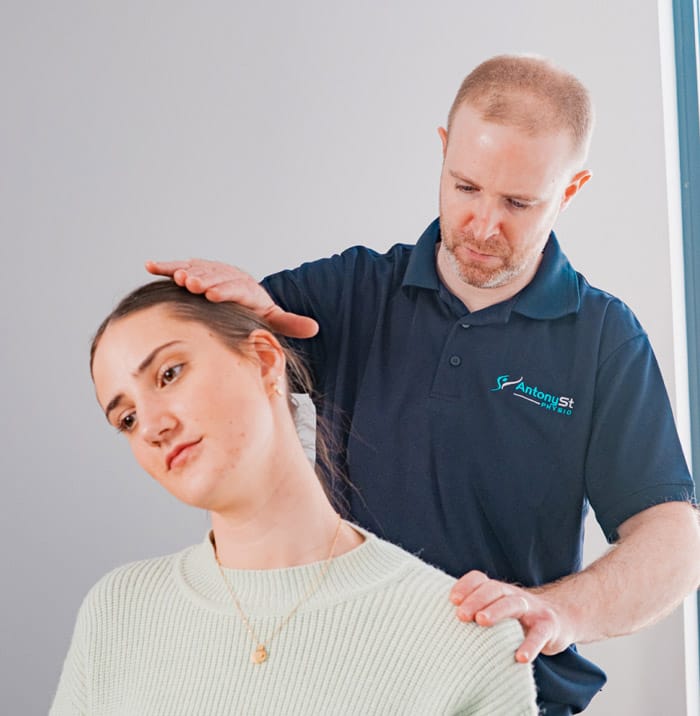
Physiotherapy for TMJ (which comes under the umbrella of Orofacial myofunctional therapy or OMT) involves addressing the contributing factors specific to each patient. This can include active exercises and modifications to improve jaw mobility and alleviate symptoms.
Joint mobilisations and soft tissue release techniques can also reduce tension in surrounding muscles and relieve pain and stiffness in the TMJ. It’s almost important to try to eliminate contributing factors like stress and posture, to prevent future flare ups.