by Feisal Zaw, Senior Physiotherapist (Leeming)

Knee pain can be super frustrating. It can come at any time, whether you’re actively trying to get back on track with exercise, or doing simple daily tasks like running around after the kids or taking a flight of stairs.
But the truth is, knee pain is almost never random – it’s a message.
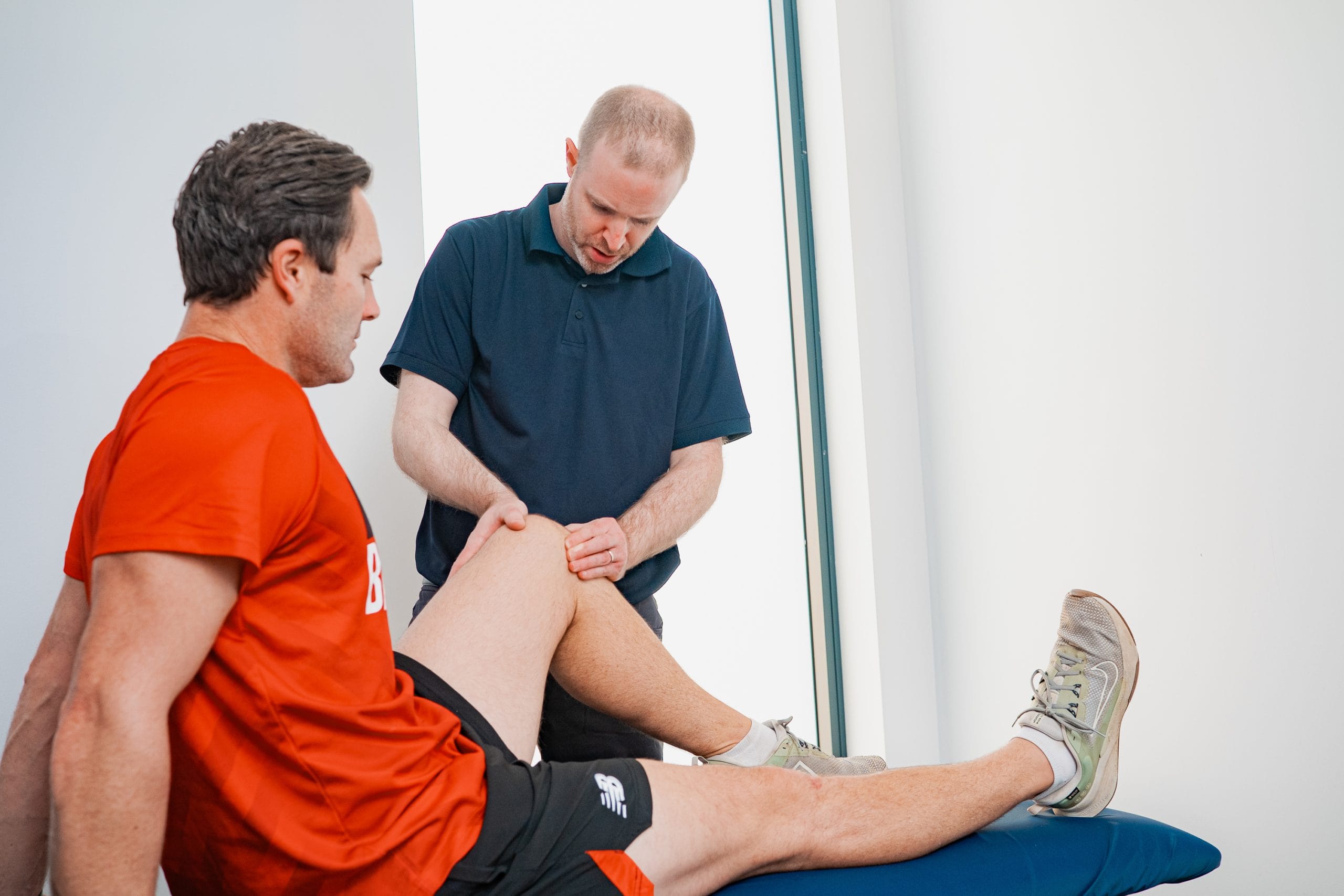
Your body is letting you know that it’s not coping with the demands you’re asking of it. So when you understand the message, you can address the underlying issue and get on top of it, rather than just chase symptom relief.
Here are three of the more common messages that your sore knee might be telling you.
Message #1: You’re Overloading It
Overload is one of the most common messages that knee pain could be telling you, and one of the most frequent issues we see in the treatment room. Examples of this might include:
- Increasing running volume or intensity too quickly
- Adding extra gym sessions
- Returning to sport after a break and trying to pick up where you left off
It’s important to note that, in this case, your knee isn’t saying to stop training altogether. It’s saying:
“I’m not prepared for this, yet.”
The solution isn’t to never attempt this task again, but more to take a a progressive approach to loading within the knee within your recovery schedule. Then your knee can adapt and then eventually tolerate what you’re asking of it. This is where a trained physio can really help.
Message #2: There’s a Technique Issue
Sometimes it’s a case of how your knee is being used. Poor movement patterns can repeatedly overload the same structures around the knee. Over time, that irritation adds up and can present itself as pain
Common examples of this include:
- Knees collapsing inward (valgus) during squats or lunges
- Poor hip control during running or walking
- Compensatory patterns that arise from previous injury
Your knee pain is telling you:
“This movement is causing stress in one area.”
Small technique adjustments, combined with targeted strength work, often make a big difference here in distributing the load evenly and creating efficient movement patterns.
Message #3: An Old Niggle Is Resurfacing
This pain feels new, but often it’s an old issue that never really resolved and has resurfaced. What usually happens:
- You had knee pain or an injury in the past
- The pain settled, so rehab stopped
- Training load, speed, or intensity starts to pick back up again
- The dormant pain comes back
This doesn’t mean you’ve re-injured your knee. What is more likely is that the knee is telling you that:
“I was never back to full capacity.”
When intensity increases again after injury, certain unresolved deficits and imbalances can get exposed.
What Should You Do Next?
Knee pain can look the same on the surface but come from very different causes. When you can understand the message behind your knee pain, you can:
- Use the knee with confidence
- Address the real cause of the knee pain
- Reduce the chance of flare-ups returning and missing time doing the activities you want to
- Improve overall performance and efficiency
Need Help Decoding Your Knee Pain?
If knee pain is holding you back, our physiotherapy team can help work out exactly what the knee is telling you and what to do about it. You can catch me in Leeming Monday to Friday, or feel free to book an appointment with any of my colleagues who will be able to help.