by Kirstyn Hush, Remedial Massage Therapist (Palmyra clinic)
“I don’t want a relaxation massage.”
This is the most common opening line when I treat pregnant or postnatal women. Closely followed by:
“Please, just give me some relief.”
Don’t get me wrong, there’s a time and place for a relaxation massage! But during and after pregnancy, quite often, isn’t it. When prenatal and postnatal patients come to me for remedial massage, they are often suffering from glute tension and persistent lower back aches, sometimes accompanied by sciatic-related discomfort radiating down one or both legs.
Many of these issues can’t be fixed with warm oil and a soothing pan-pipe soundtrack (as lovely as they are). They require targeted, hands-on massage therapy that genuinely improves how patients move and feel.
Why Hands-On Massage Matters in Pregnancy and Postpartum
Whether you’re growing a human or have just had one, your body goes through enormous changes. Your pelvis, back and hips carry more weight than usual, your centre of gravity shifts, and hormones like relaxin make connective tissue more flexible. Muscles in your glutes and lower back have to work overtime, often in postures that irritate nerves such as the sciatic.
After giving birth, you’re bending, lifting, feeding and moving in new ways while your body is still recalibrating, which can result in tightness, nagging joint pain and aches that are hard to settle without help.
Prenatal and postnatal remedial massage addresses these real, functional issues, helping to reduce their impact while supporting circulation and allowing muscles to work more efficiently.
Glutes, Lower Back and Sciatica – Your 3 Biggest Pain Culprits
There are three main trouble zones that remedial massage during and after pregnancy can meaningfully treat:
1. Glutes and hips
Tight glutes can cause pelvic, sacroiliac, and hip discomfort, especially as your body adapts to pregnancy load and post-birth activity. Targeted manual therapy helps these muscles release and function better.
2. Lower back
Tension often migrates here when muscles above and below are working harder. Massage eases tightness and influences how you engage muscles when you move.
3. Sciatica pain
When the sciatic nerve is irritated by postural shifts and muscular tension, it can radiate pain anywhere from your glutes down your legs. Manual work through the glutes, lower back, and hamstrings can ease tension around the nerve and provide noticeable relief.
What Happens in a Pre- or Postnatal Massage
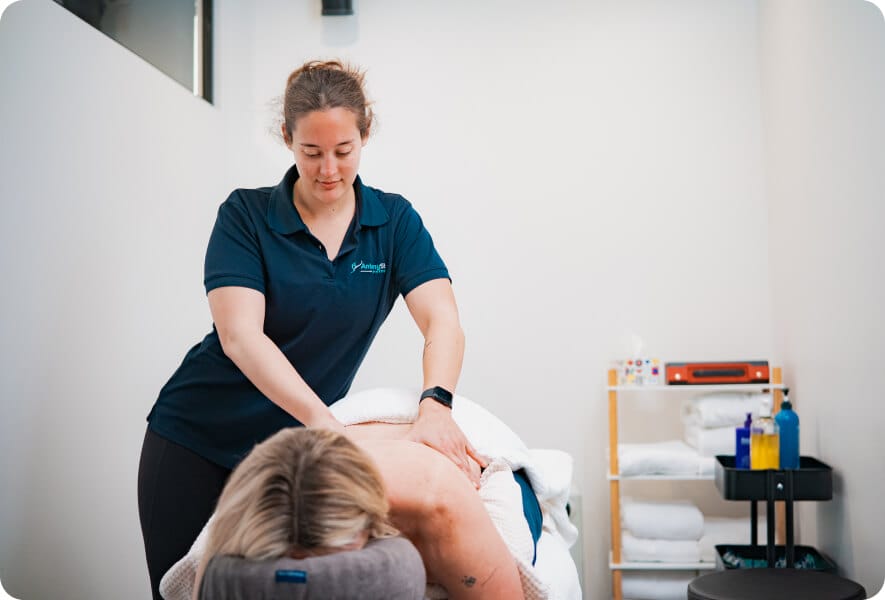
When pregnant, you’ll be positioned for comfort and safety—either face down on a certified belly pillow or lying on your side with supportive bolsters.
Pressure is moderate but intentional. As a therapist, I listen to your body and adjust. You shouldn’t feel strong pain, but you will hopefully feel your muscles release.
The focus is on targeting soft tissue areas that contribute to your pain, not just massaging areas that feel sore. When glutes, lower back, or sciatic tension eases, you’ll notice a real difference in how you walk, sleep and move.
What You’ll Notice Afterward
The changes we aim for include:
- Less tension in the lower back and hips
- Improved comfort when walking, climbing stairs or holding/feedubg your baby
- Reduced nerve irritation down the leg
- Better circulation and reduced swelling
When the root cause of tension is addressed, from muscle behaviour to compensatory patterns and nervous system tension, my patients generally experience relief that lasts beyond the table.
Safety in Pre- and Postnatal Massage
Like all clinical care, pre- and postnatal massage should be delivered by someone trained in pregnancy biomechanics and postpartum recovery. That means:
- No deep abdominal pressure during pregnancy
- Supporting circulation and comfort
- Adjusting techniques for trimester and postpartum stage
If you’re experiencing a high-risk pregnancy or have specific medical concerns, it’s best to check with your doctor or midwife before booking a session.
Book a remedial massage with Kirstyn in Palmyra or call us to find a time that suits you (and your baby’s) schedule.