by Feisal Zaw, Senior Physiotherapist (Leeming clinic) + Murdoch University Melville (MUM) FC player
I want to share my journey through an achilles injury I picked up early this year and take you through how I tackled it with a structured rehab plan.
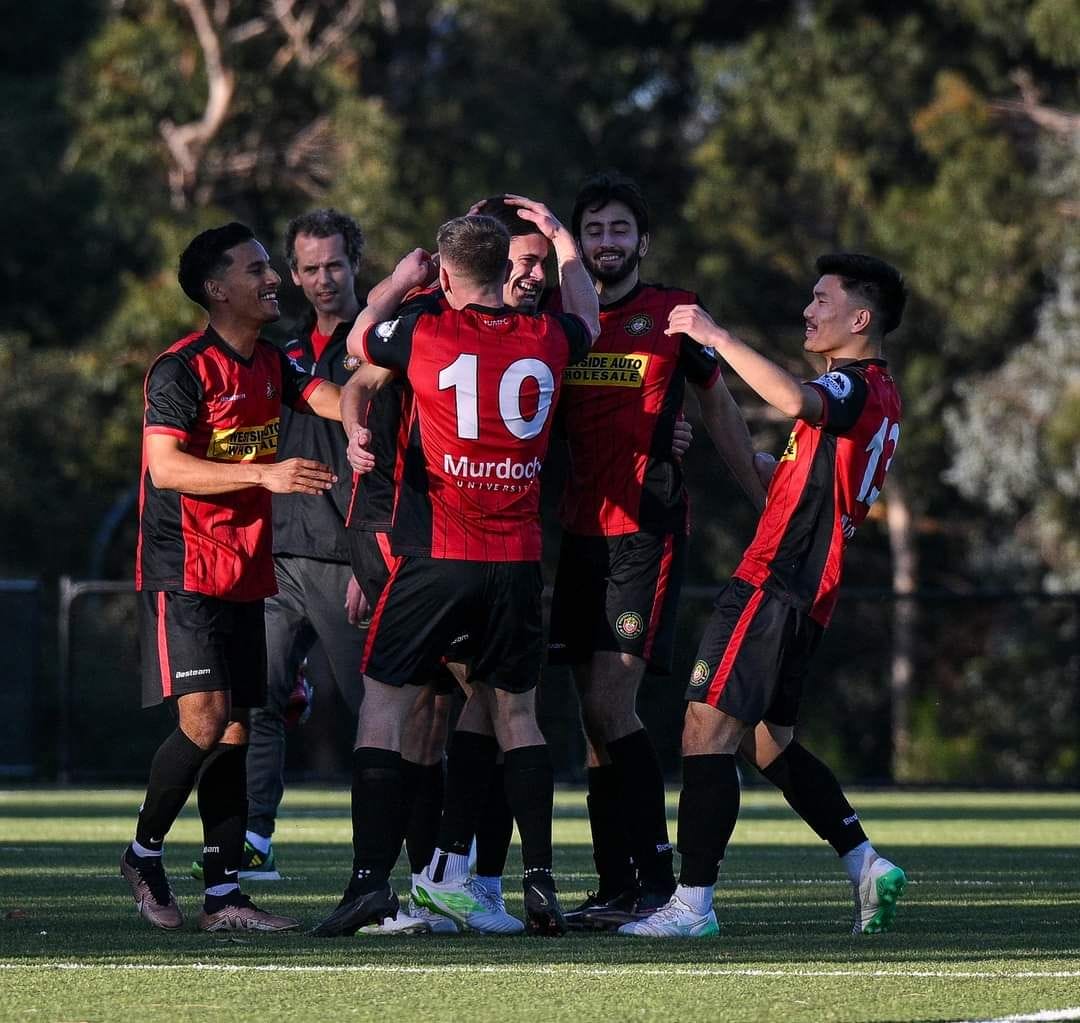
It all started in early January, on the eve of soccer pre-season. As a winger for Murdoch University Melville (MUM) FC in the state soccer league, I had maintained off-season fitness with running and strength work, but as soon I dived back into training my achilles immediately started complaining. Soccer is a very different beast to running in a straight line or gym work, characterised by lots of sprinting, rapid direction changes and explosive movements.
As a physio, I know how this tendon behaves, and had experienced low grade achilles pain before. With tendons, there’s a point where they can adapt to intense work, but if you repeatedly push past it, the tendon is eventually going to react. And yet, I pushed through at training hoping it was a minor flare up – and because I was happy to be back out on the training park.
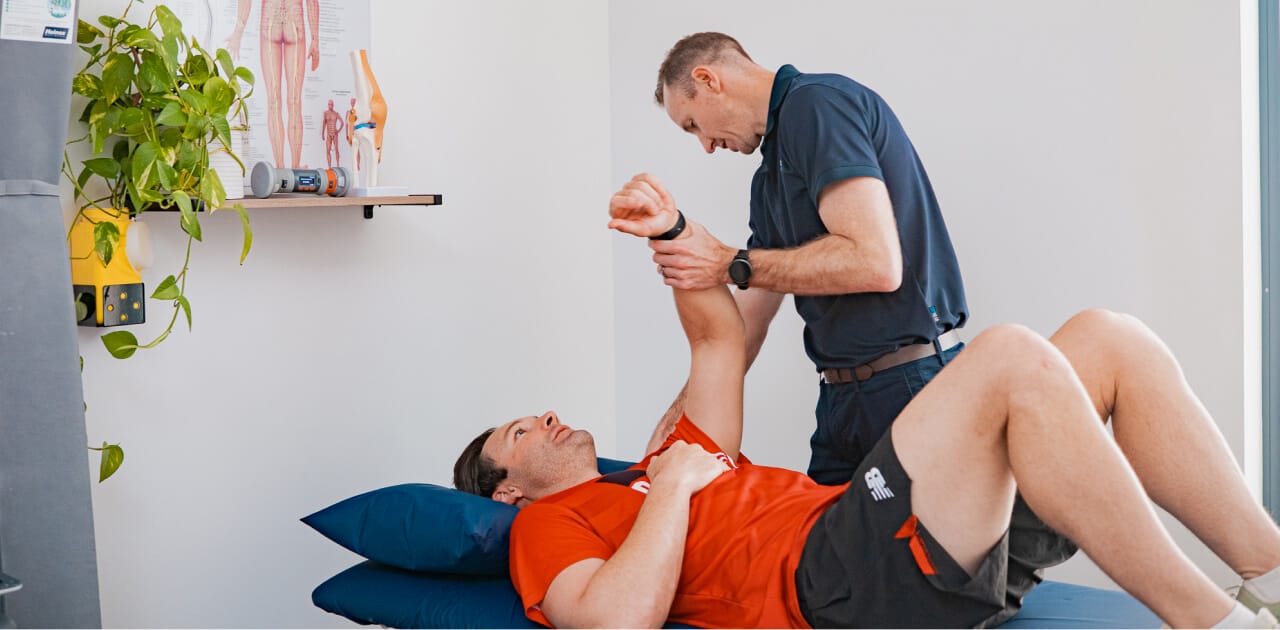
The next morning the pain had worsened to 5/10, and that level held over the next few days. At work, I immediately jumped into a session with my colleague Angus, who assessed the injury, did some needling and collaborated with me on a rehab program.
Understanding Achilles Tendinopathy
Achilles tendinopathy happens when the tendon is stressed beyond its capacity. If you push through a flare-up, it doesn’t get stronger, it becomes weaker and more painful. Tendons don’t respond well to rest alone. Yes, rest might result in a temporary lessening of discomfort, but as soon as you return to the activity, your pain will flare up again.
The key is to load the tendon progressively, without aggravating it. For most achilles injuries this means a rehab of 8–10 weeks. Unless you catch it early and do all the right things, which can reduce that time to 4–6 weeks. It’s definitely an injury you don’t want to push through.
Achilles Rehab Approach: Slow and Steady
As your achilles is crucial for explosive movements like springing, propulsion, jumping and running, rehab focuses on gradually reintroducing these movements. Here’s the progression I’ve been working through since mid-January:
- Isometric double-leg calf raises, holding the position to activate the tendon without a full contraction for 30-45 seconds x 5.
- Moving to the same for single-leg holds.
- Introducing up-and-down movements on double-leg, then single-leg.
- Adding weight (like a kettlebell or dumbbell) to the movement.
- Progress to faster movements like controlled hopping jumping and bounding.
- Moving into running.
- Returning to training, starting with lower intensity drills for a reduced duration, then gradually increasing time and effort.
The aim is to keep pain below a 3/10 during and after the activity. Throughout, I’m keeping a close eye on how my achilles feels in the morning, as this is the best time to gauge the tendons response to loading. The reason being that your tendon is naturally warmer during the day from general use, so you may not realise until the morning after if you’ve pushed it too hard.
Physio Treatment Plan
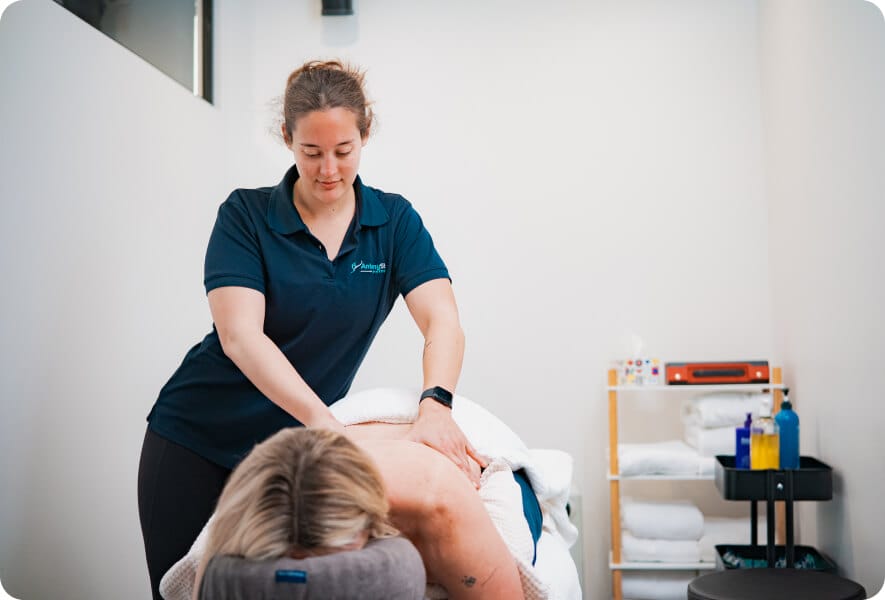
I began seeing one of my colleagues weekly, then fortnightly as my progress allowed. These sessions included soft tissue work, strength checks and functional assessments like hopping and jumping.
Cross-Training and Building Supporting Muscles
While my achilles heals, I’ve kept my cardio up with bike and swimming sessions, while strengthening my quads and glutes to take some load off the tendon. Keeping my weight in check and maintaining overall fitness also helps prevent setbacks, so I have been maintaining good sleep, nutrition and rest, as these are equally important to tendon health.
Looking Ahead
At this stage, I’m on track to be ready for round 1 towards the end of March. Missing pre-season training and games has been frustrating, but it was a blessing this happened early in the year, as it has given me time to rehab fully before the competitive season kicks off.
Achilles injuries can recur, so my goal is to get stronger while continuing to monitor how it feels. With a careful approach, slow progression and attention to overall fitness, I’m confident I’ll get back on the field.
If you have achilles pain that lasts more than two weeks, it’s worth getting it checked out. The longer it goes there is a change the tendinopathy becomes chronic, which is much harder to reverse, so early intervention is key.
You can see me in Leeming from Monday to Friday. Call the clinic or book an appointment online.