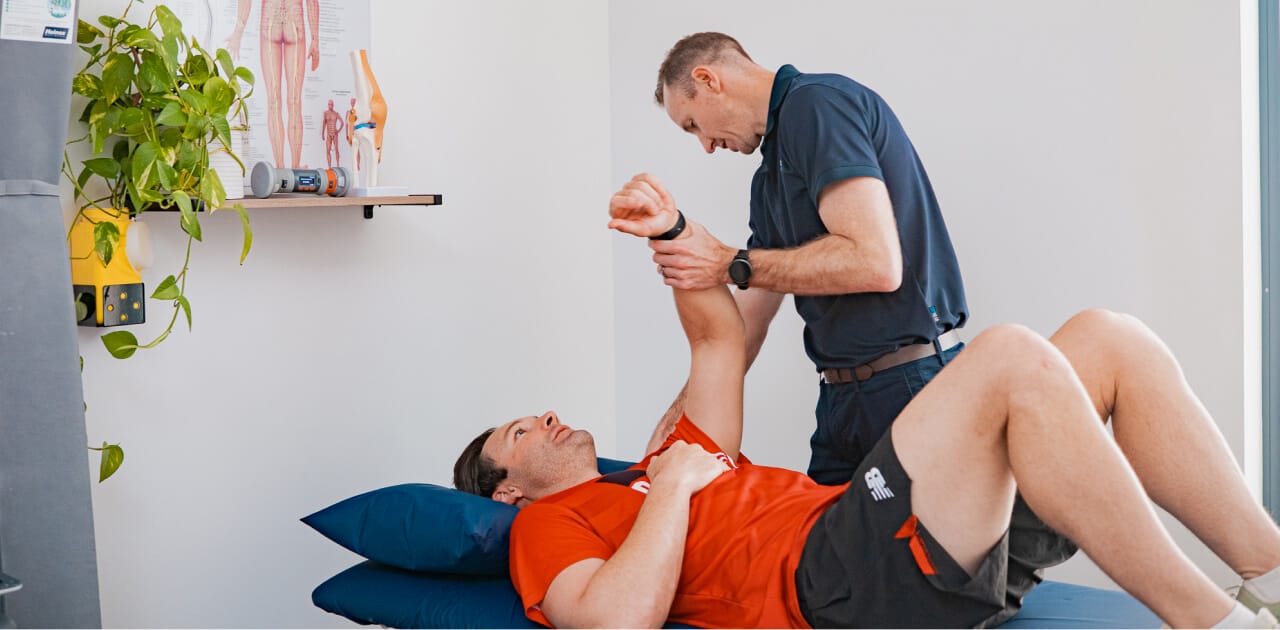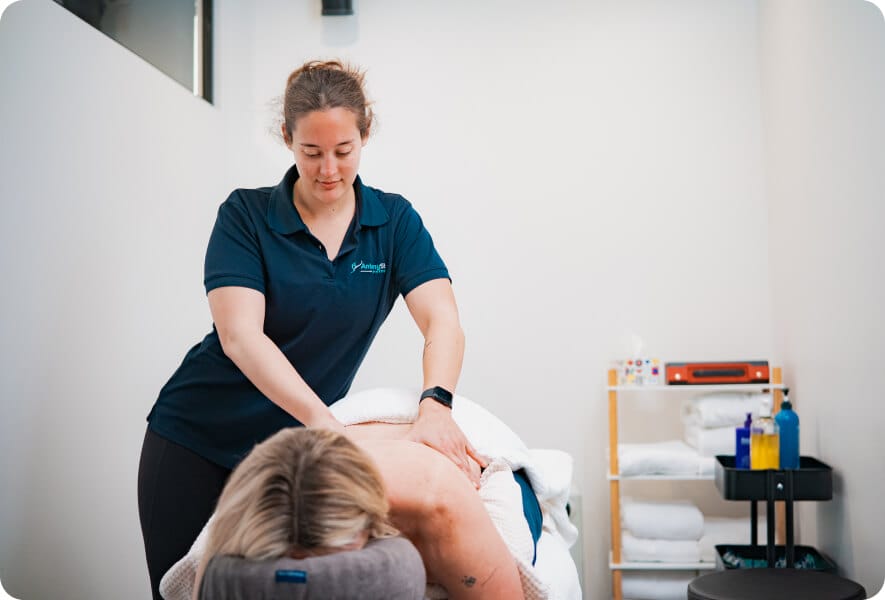
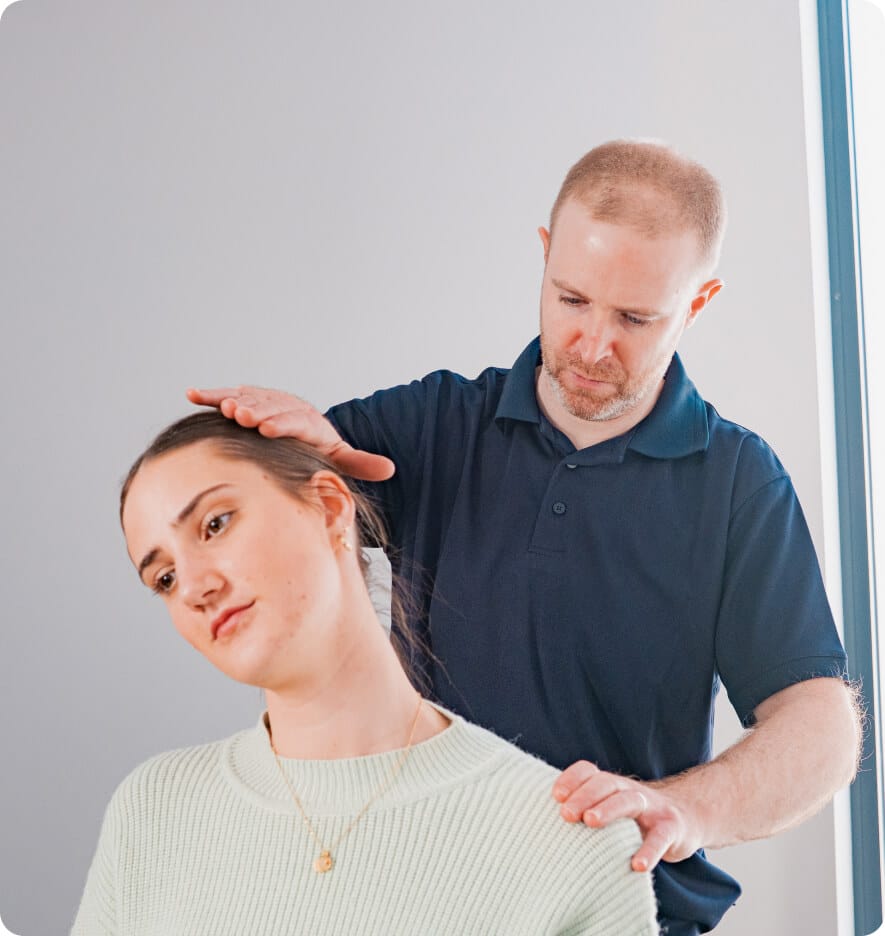
Sports injuries, desk job necks, weekend warrior ankles – we’re here for it all
Our general physio services cater to all shapes, sizes, lifestyles and physical abilities.
As general physios… we treat a full range of movement issues and injuries, using a combination of manual (hands on) therapy, dry needling, mobilisation and stretching techniques, and therapeutic exercise.
As expert sports physiotherapists… we regularly treat amateur and professional athletes, with a view to getting them back in the game fitter, faster – and with a better understanding of how their injury occurred and how to minimise the risk of it happening again.
We can also help you… with the all-important pre and postnatal period via our specialist women’s physio, with pre- and post-surgery rehabilitation, and everything from a sore shoulder to back and neck pain, to runners’ knee, tendonitis and male and female incontinence.
What can you expect from physiotherapy treatment?
Our philosophy is a little different. We’re not just here to treat your pain, we want to help you feel like yourself again.
We achieved this by:
- Providing holistic physio treatment encompassing manual therapy, dry needling, mobilisation and stretching techniques, and therapeutic exercise.
- Thorough ‘data driven strength assessment’ using the latest VALD strength testing equipment.
- Prescribing additional treatment and return to exercise guidance based on your unique case and our assessment findings.
At the heart of it all, is our mission to get our patients back to full health and their optimal lifestyle, without needing to see us every other week. After all, providing physiotherapy services in Perth gives us a unique responsibility to get patients back outside enjoying the best of our great city.
Sometimes when you go to a physio, they just treat the symptoms. The Physio73 team look at your movement patterns and surrounding muscle strength, as they may be the reason you are having pain or overload in a certain area.
If they recommend more treatment, you can fully trust that it is essential to managing the root cause of your injury or problem. Their goal is to address the cause so you can get back to things you want to do, without having to keep going in again and again.”
– Aaron
Our physiotherapists
Each one of our team, whether they are a general physiotherapist, are trained in women’s physio and health, or have a sports physio speciality, completes regular training and professional development, to ensure we offer the most recent evidence-based treatment.
Jump over to the meet our physios page to put faces to names.
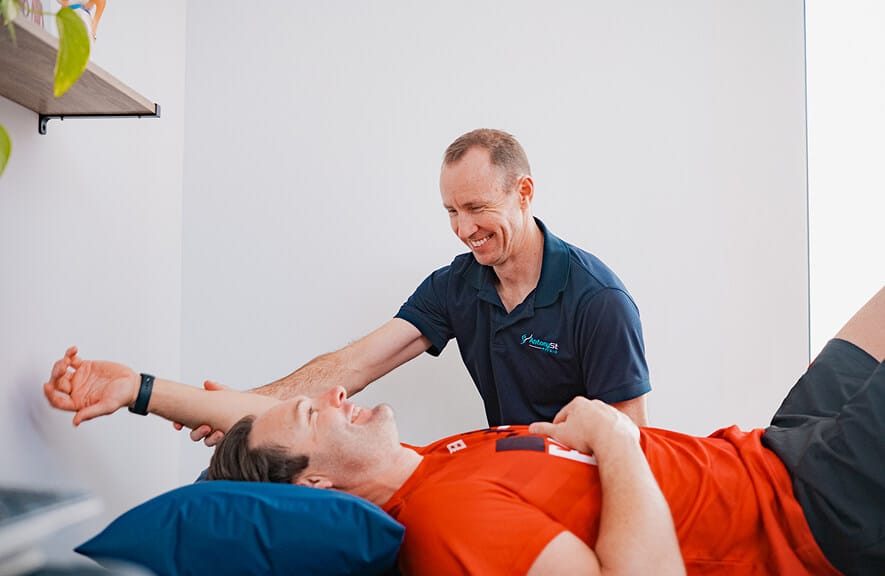
Did you know physios can:
- Fit moon boots and other braces/prosthesis
- Have established relationships with many Perth surgeons and doctors
- Can test balance, function and falls risk assessments
- Treat Motor Vehicle Accident claims
- Assess and diagnose vertigo (BPPV specifically)
- Manage tempero-mandibular joint (jaw) pain
- Treat sexual health, erectile dysfunction and offer prostate rehab
At the heart of it all, is our mission to get our patients back to full health and their optimal lifestyle, without needing to see us every other week. After all, providing physiotherapy services in Perth gives us a unique responsibility to get patients back outside enjoying the best of our great city.
Conditions we treat
ATFL (ankle) sprain
An ATFL sprain refers to a sprain of the anterior talofibular ligament – one of the most commonly injured ligaments in the ankle. The anterior talofibular ligament connects the talus bone (in the foot) to the fibula bone (in the lower leg) and helps to stabilise the ankle joint.
An ATFL ankle sprain typically occurs when the ankle is twisted or turned in an unnatural position, causing the ligament to stretch or tear. This can happen during activities such as running, jumping, landing awkwardly or due to a sudden impact or fall.
Acute wry neck
Acute wry neck, also known as acute torticollis, is a sudden and painful spasm of the neck muscles that causes the head to twist or tilt to one side. It often develops overnight, with patients waking up with a sudden sharp, stiff neck pain and an inability to turn their head. The pain is generally localised to one one-side, and it can sometimes radiate into the shoulder joint or the upper back.
Bursitis
A bursa is a small, fluid-filled sac that acts as a cushion between bones, tendons, and muscles in the body. Bursae help to reduce friction and allow for smooth movement of the joints and surrounding tissues.
There are more than 150 bursae in the human body, the largest and most well-known bursae are located near the major joints such as the shoulder, elbow, hip, and knee. However, bursae can be found throughout the body, including in the hands, feet and spine.
Cartilage pain/damage
Cartilage is a firm yet flexible tissue that provides cushioning and support for bones and other tissues. It’s a type of connective tissue that is found in numerous locations within the body, particularly in your joints, ears nose and ribs. It’s
Cartilage performs several key roles. Here’s why:
- It acts like nature’s shock absorber, reducing the friction between your bones and joints, which helps prevent damage and pain.
- It provides structural support for body parts like your nose and ears.
- It serves as a smooth surface for joint movement, allowing you to have easier, more efficient motion.
- It’s involved in the development of bones and other vital tissues.
- It helps certain organs to keep their shape, such as the trachea and the larynx.
Cervical radiculopathy
Cervical radiculopathy is a condition that occurs when a nerve in your neck becomes compressed or irritated, leading to pain and other symptoms. You might also hear it called simply a pinched nerve in the neck.
This can happen when a herniated disc or a bone spur puts pressure on the nerve as it exits the spinal cord.
Cervicogenic headaches
Do you suffer from headaches? It may be caused by neck pain.
Cervicogenic headaches are a type of secondary headache, meaning they originate from another source, specifically the cervical spine (the neck) and its structures. Unlike primary headaches like migraines or tension headaches, cervicogenic headaches are caused by disorders or dysfunctions in the neck region, stemming from the vertebrae, discs, muscles or nerves.
The most common reasons for these headaches include bad posture, particularly in desk-bound workers or those who spend long periods sitting down or looking at devices, which strains the neck muscles and joints. Other causes include whiplash, cervical spine degeneration due to ageing and arthritis.
Dry needling
Dry needling is a form of therapy that involves the insertion of thin needles into trigger points in muscles and soft tissues to relieve pain and improve function. Dry needling is based on Western medicine principles and is focused on the treatment of musculoskeletal conditions.
The exact mechanism of how dry needling works is not well understood, but it is thought to work by stimulating the body’s natural healing process.
Dry needling can be used to treat a variety of musculoskeletal conditions, including back pain, neck pain, shoulder pain, hip pain and headaches. It is often used in conjunction with other therapies, like physiotherapy or massage, to help relieve pain and improve function.
What dry needling involves
The needles are inserted into the trigger points, which are areas of tightness or knots in the muscles, to stimulate a response from the nervous system. This can cause the muscles to relax, while improving blood flow to the area and promoting the release of natural pain-relieving chemicals in the body.
Facet joint arthropathy
Facet joint arthropathy is a condition that affects the facet joints in your spine. These joints are located between each vertebra and allow your spine to move and bend. Arthropathy refers to joint disease or damage.
Facet joint arthropathy occurs when the cartilage that cushions the facet joints wears away, causing bone-on-bone contact between the vertebrae. This can result in pain and stiffness in your back and may even lead to the development of bone spurs.
Facet joint arthropathy is commonly caused by degeneration with aging, wear and tear, or injury.
Frozen shoulder
Frozen shoulder, also known as Adhesive Capsulitis, is a condition that affects the shoulder joint, causing stiffness and pain. The shoulder joint has a capsule of connective tissue that surrounds it and holds it in place. When this capsule thickens and tightens, it can restrict movement and cause pain.
The exact cause of frozen shoulder is unknown, but it often occurs after a period of immobilisation or injury to the shoulder. There is an increased risk for people with diabetes or thyroid problems.
The exact cause of frozen shoulder is unknown, but it often occurs after a period of immobilisation or injury to the shoulder. There is an increased risk for people with diabetes or thyroid problems.
Labral tear
A labral tear is a type of injury that occurs when the labrum, a piece of fibrocartilage that lines the rim of the shoulder or hip joint, becomes damaged or torn.
The labrum helps to stabilise the joint by deepening the socket and providing a surface for the joint capsule and ligaments to attach to. When the labrum is torn, it can cause pain, instability and weakness in the affected joint.
Lateral hip pain
Lateral hip pain is also known as hip bursitis or greater trochanteric pain syndrome (GTPS). It’s a common condition that is characterised by discomfort or pain on outside of the hip, the area encompassing the greater trochanter (a bony prominence on the femur) and the surrounding soft tissues (including tendons, muscles and bursae.)
Inflammation is one of the main causes of lateral hip pain, or irritation of the trochanteric bursa – a fluid-filled sac that acts as a cushion between the greater trochanter and the overlying muscles and tendons.
Lumbar facet joint sprain
A lumbar facet joint sprain is a common injury that affects the small joints in the lower back, called the lumbar facet joints. You may hear it referred to as a lower back sprain.
The lumbar facet joints are located on either side of the spine and connect the vertebrae together, allowing for movement and flexibility in your lower back.
A facet joint sprain occurs when the ligaments that support the joint become stretched or torn, typically as a result of sudden twisting or bending. This can cause pain and stiffness in the lower back, as well as tenderness and swelling around the affected joint.
Rotator cuff related shoulder pain
The rotator cuff is a group of four muscles and their associated tendons that work together to help stabilise and move the shoulder joint. Rotator cuff related shoulder pain is a common condition that is caused by damage or injury to the rotator cuff muscles and tendons in the shoulder joint.
Tennis elbow
Lateral epicondylalgia, more widely known as tennis elbow, is a condition characterised by pain and tenderness on the outside of the elbow. It’s especially common among people aged 30 to 50 and is one of the most common sources of elbow pain.
The primary cause of tennis elbow is the overuse of the extensor muscles of the forearm, which are attached to the lateral epicondyle (a bony prominence on the outer elbow). Repeated stress or microtrauma to this area can lead to microscopic tears, degeneration and inflammation of the tendons, resulting in elbow pain and weakness.
TMJ
The temporomandibular joint (TMJ) is a sliding-hinge joint which connects the jawbone to the skull and is responsible for opening and closing the mouth. Both the joint itself and the surrounding muscles can be a source of TMJ pain, and it is experienced by people who clench or grind their teeth at night, who have experienced trauma to the area, have arthritis or jaw alignment issues, and muscle tensions from triggers like poor posture, stress and even chewing gum.
Tendinopathy
Tendinopathy is a condition that affects tendons – AKA, the thick, fibrous cords that attach muscles to bones in your body. Tendinopathy is characterised by pain, stiffness, and weakness in the affected tendon, and it can occur for a variety of reasons including overuse, injury or underlying medical conditions.
There are two main types of tendinopathy: tendinitis and tendinosis. Tendinitis refers to inflammation of the tendon and is typically caused by overuse or repetitive motion. While tendinosis is degeneration of the tendon tissue, which happens over time due to chronic injury or aging.
Latest from the blog
Practical physio advice and information to help you build resilience, prevent setbacks and stay active.