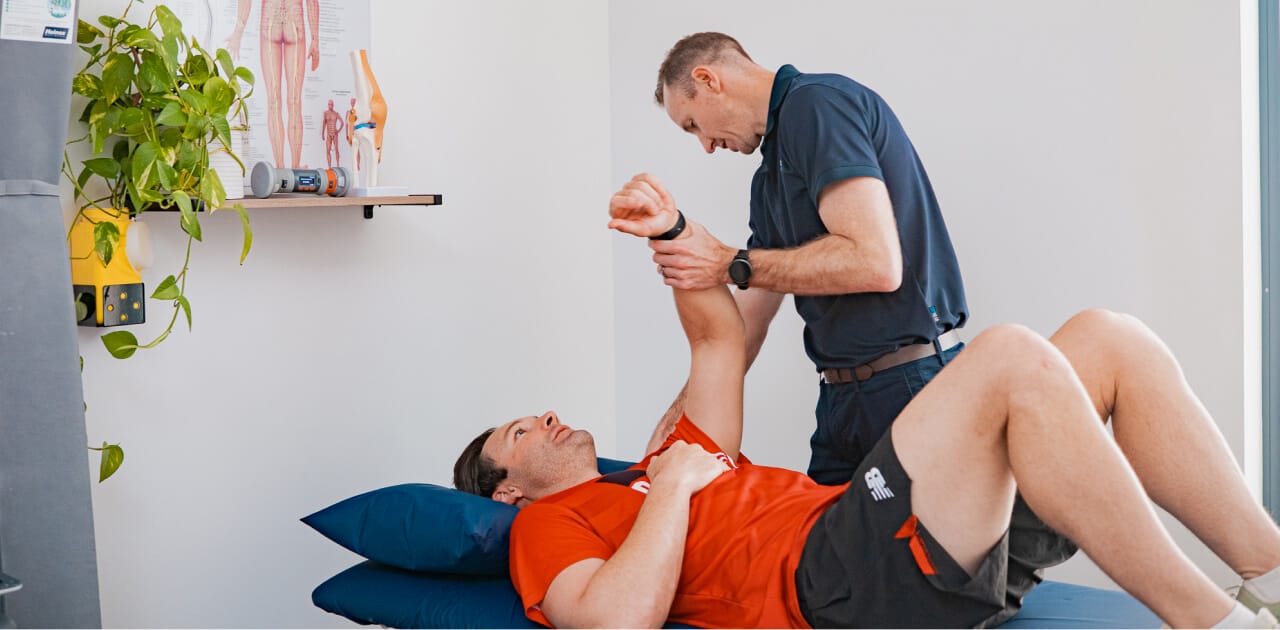
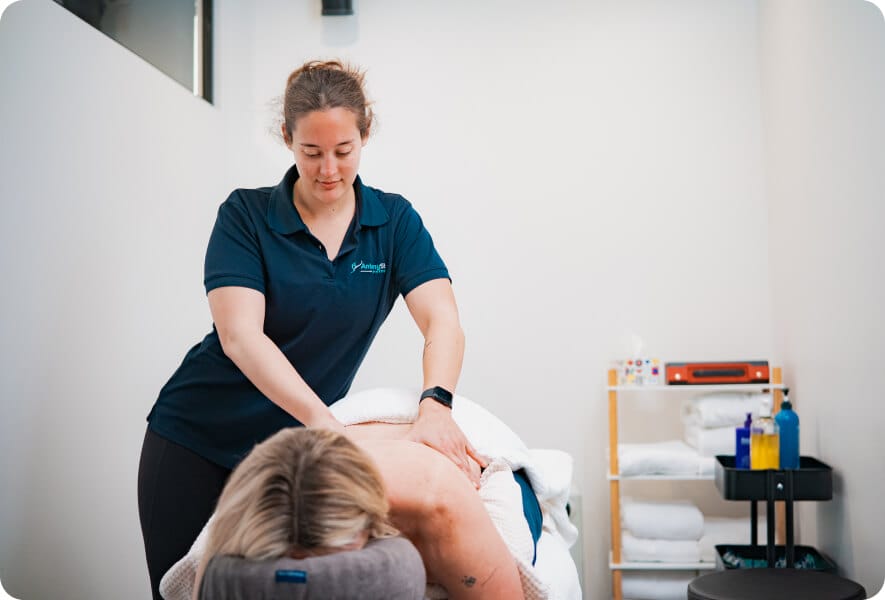
If you live in South Perth, Palmyra or Fremantle and have been searching for ‘remedial massage near me,’ we can offer expert remedial massage to relieve pain, restore movement and support your wellbeing.
Remedial massage therapy involves manual treatment of muscles, tendons, ligaments and connective tissue, and can be used to help with rehabilitation, pain and injury management. When you book a remedial massage, the goal is to reduce or eliminate pain and restore normal movement and function.
What does remedial massage involve?
A remedial massage treatment at Physio73 Palmyra involves a wide range of best practice treatment methods including deep tissue, trigger point release dry needling and myofascial cupping. It’s your personal preference as to which of these methods you like or feels beneficial, and your therapist can help you make informed decisions.
Health benefits of remedial massage
Whether you’re an athlete, office worker, or simply dealing with everyday muscle tension or discomfort, our qualified therapist provides tailored remedial massage in south Perth to suit your needs.
Remedial massage therapy is ideal for athletes tracking their performance, people undergoing rehabilitation after injury or surgery, or anyone wanting a clear picture of strength and movement. The benefits of remedial massage include:
- Encourages blood flow
- Decreases muscle tightness
- Can improves posture
- Can increases the range of joint motion
- Helps to manage overall pain and injuries
- Reduces stress
- Osteoarthritis
Remedial massage cost
Private health rebates apply to all health funds with remedial massage cover.
40 minutes
$102
60 minutes
$124
80 minutes
$149
Remedial massage therapy methods
Deep tissue massage targets chronic tension in muscles that lie far below the body’s surface. This method of massage is the one commonly used to treat musculoskeletal injuries.
Sometimes referred to as sports massage, deep tissue massage techniques include slow, deep strokes along the muscle, direct and sustained pressure into the muscle, or friction movements across the muscle grain.
Myofascial cupping is the process of placing cups onto the skin and then drawing out the air from inside the cup. This creates a negative pressure that gently lifts and separates the connective tissue beneath the skin.
The cups can be left in place for a short period of glided along the surface. It can help to increase blood flow to the area being cupped, reduce restrictive fascia adhesions, and assist in maintaining range of motion in joints.
Cupping can cause temporary discoloration on the skin, which is due to the blood that is released from the capillaries beneath the skin during the process. These are no different to a normal bruise and will settle over the following days.
Dry Needling targets trigger points found within the muscle and associated fascia. When your therapist has located these trigger points, a very fine, sterile needle is inserted into them. There is no fluid in the needle, and it is the action of the needle activating the trigger point that provides the relief.
The needle will remain in your skin for a short period of time, before being taken out and disposed of. The duration will depend on your therapist and the area being treated. Dry needling treatment can be effective in the treatment of myofascial pain and chronic muscle dysfunction.
Conditions we treat
Pregnancy and postnatal back pain
General back pain can occur both with the many pregnancy and postnatal changes to your body. The growing weight of your pregnant belly puts pressure on the lumbar spine causing joint stiffness and surrounding muscle tension, while hormones loosen joints and ligaments during pregnancy.
After delivery, demands on the back change, with large amounts of repetitive bending and lifting of your growing baby. Static postures, such as those while comforting and feeding your baby, will also increase load on the spine and potentially cause to pain. Women’s physiotherapy can help relieve symptoms of pregnancy and postnatal back pain.
Dry needling
Dry needling is a form of therapy that involves the insertion of thin needles into trigger points in muscles and soft tissues to relieve pain and improve function. Dry needling is based on Western medicine principles and is focused on the treatment of musculoskeletal conditions.
The exact mechanism of how dry needling works is not well understood, but it is thought to work by stimulating the body’s natural healing process.
Dry needling can be used to treat a variety of musculoskeletal conditions, including back pain, neck pain, shoulder pain, hip pain and headaches. It is often used in conjunction with other therapies, like physiotherapy or massage, to help relieve pain and improve function.
What dry needling involves
The needles are inserted into the trigger points, which are areas of tightness or knots in the muscles, to stimulate a response from the nervous system. This can cause the muscles to relax, while improving blood flow to the area and promoting the release of natural pain-relieving chemicals in the body.
Acute wry neck
Acute wry neck, also known as acute torticollis, is a sudden and painful spasm of the neck muscles that causes the head to twist or tilt to one side. It often develops overnight, with patients waking up with a sudden sharp, stiff neck pain and an inability to turn their head. The pain is generally localised to one one-side, and it can sometimes radiate into the shoulder joint or the upper back.
Cervical radiculopathy
Cervical radiculopathy is a condition that occurs when a nerve in your neck becomes compressed or irritated, leading to pain and other symptoms. You might also hear it called simply a pinched nerve in the neck.
This can happen when a herniated disc or a bone spur puts pressure on the nerve as it exits the spinal cord.
Latest from the blog
Practical physio advice and information to help you build resilience, prevent setbacks and stay active.