Get back in the game stronger with sports physio
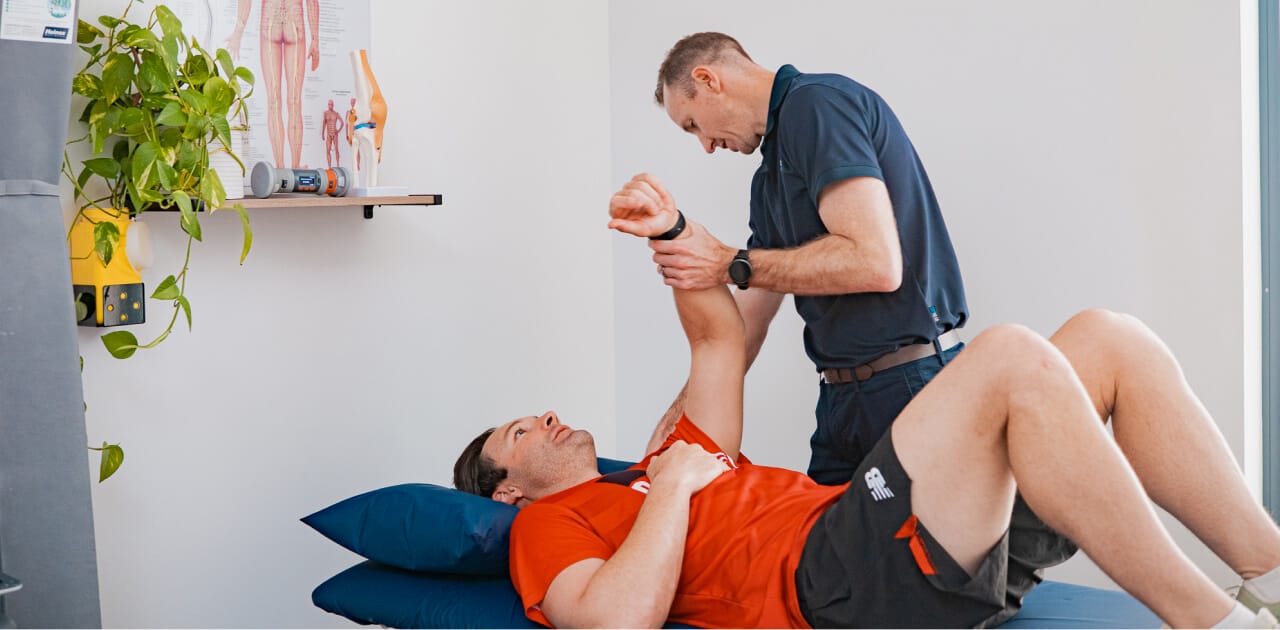
As experts with a special interest in sports, our physios can help get you back to peak performance. We are experienced in treating a range of sports injuries, from professional athletes through to amateurs, gym-goers and weekend warriors.
Our sports physiotherapy services aren’t just designed to treat the issue and send you on your way. We use the latest strength testing equipment and training to analyse your movement patterns, identify the root cause of your injury and any weaknesses that may be present, before designing a recovery roadmap that gets you back to what you love, while minimising the risk of re-injury.
Why choose us for sports physiotherapy?
As fellow sports nuts, our physios understand how vital staying in the game is. We also know that being on our table isn’t where you want to be – so our mission is to help get you off it as efficiently and safely as possible.
What does treatment involve?
Should you visit us for sports physio in Leeming or Palmyra, you will find a team committed to getting you back to optimal performance through:
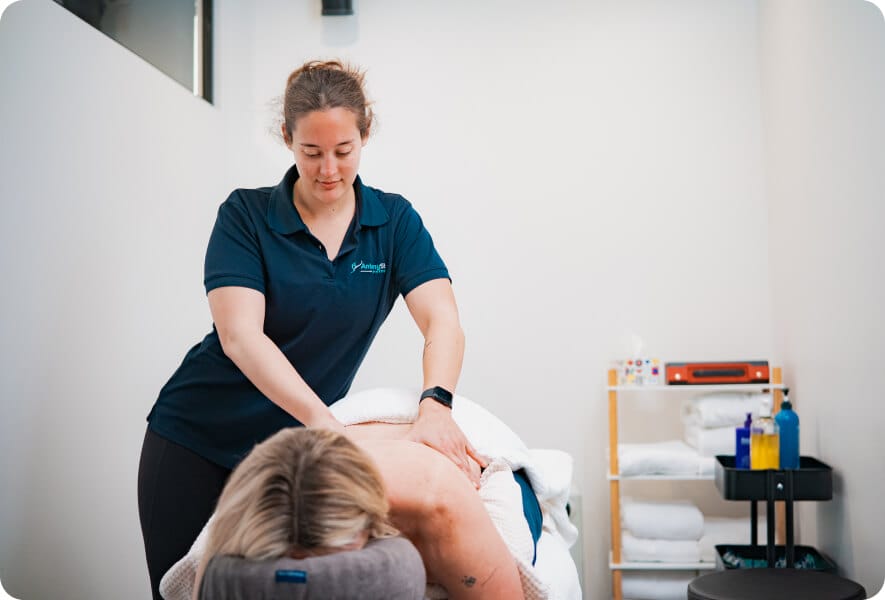
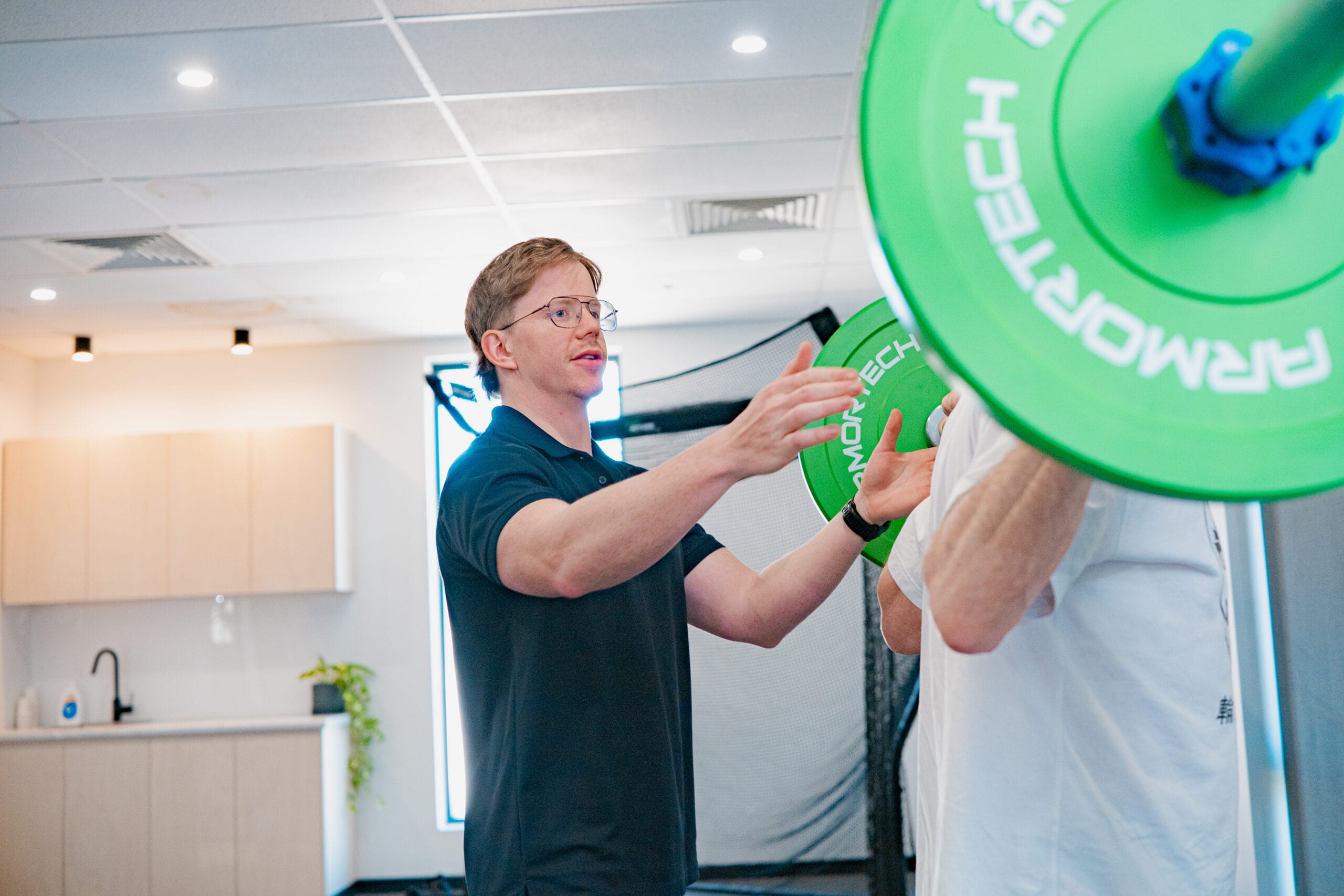
- Best practice use of manual therapy, dry needling, targeted strengthening programs and movement retraining to address not just your symptoms, but the underlying biomechanical issues that led to injury.
- State-of-the-art VALD strength testing technology, that gives us accurate data that indicates your strength deficits and progress over time, reducing guess work and improving outcomes.
- Individualised rehabilitation plans built around your body, goals and timeline.
“I’ve been coming to this clinic for years whenever I’m back in Australia, and it honestly feels like home. The team here always takes the time to understand where I’m at with my body and performance goals — it’s never just a quick in-and-out session.
The attention to detail in my treatment and the care they put into getting me performing at my best is next level. Every time I walk through the door, I know I’ll get the same level of care, great conversation and plenty of laughs. I wouldn’t go anywhere else.”
– Bjay Cooke – Major League Baseball & Perth Heat Player
Our physiotherapists
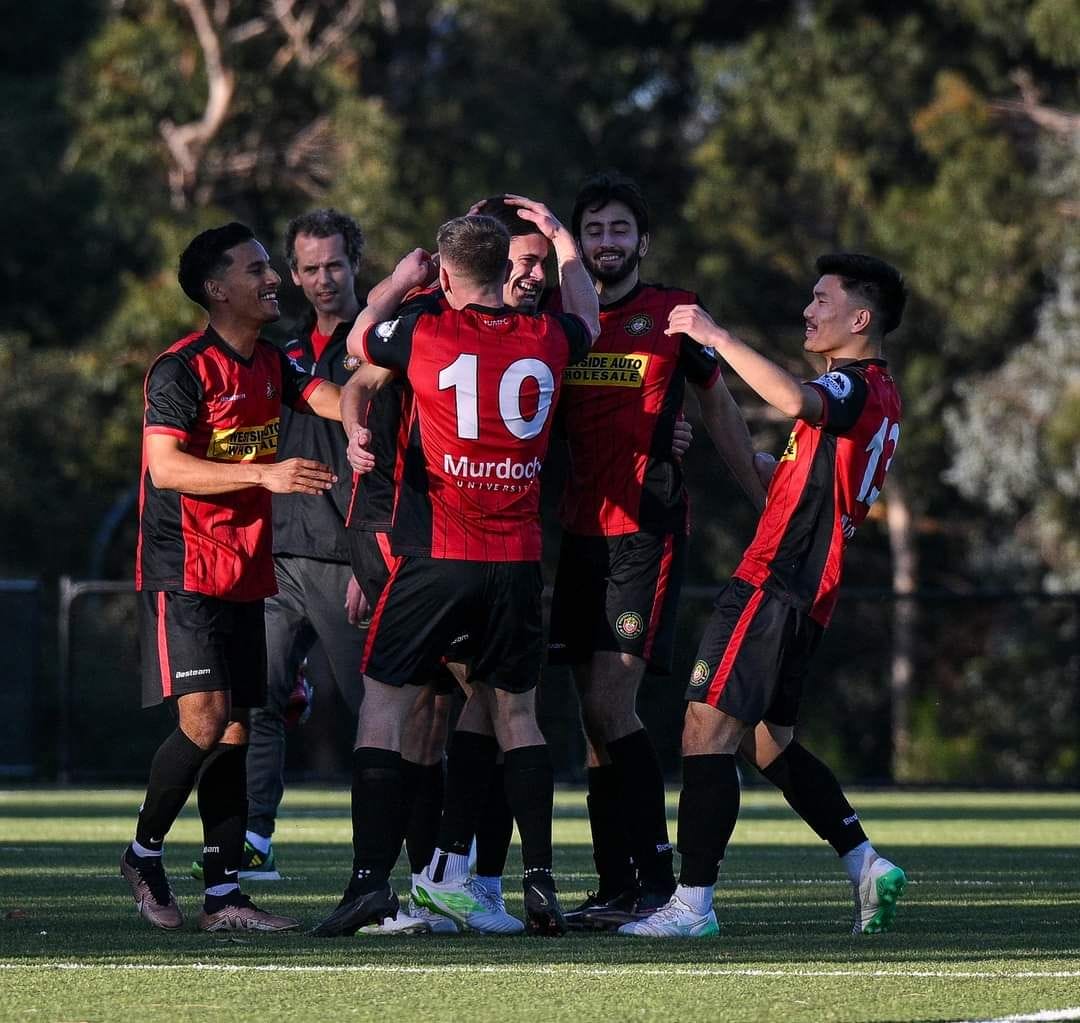
Everyone on our team undertakes regular training and professional development, to ensure we offer the most recent evidence-based treatment. We are also engaged as sports physios in Perth professional and amateur clubs, including Perth Heat Baseball and WAFL clubs.
Visit the meet our physios page to see which therapists may best suit your treatment.
Conditions we treat
ATFL (ankle) sprain
An ATFL sprain refers to a sprain of the anterior talofibular ligament – one of the most commonly injured ligaments in the ankle. The anterior talofibular ligament connects the talus bone (in the foot) to the fibula bone (in the lower leg) and helps to stabilise the ankle joint.
An ATFL ankle sprain typically occurs when the ankle is twisted or turned in an unnatural position, causing the ligament to stretch or tear. This can happen during activities such as running, jumping, landing awkwardly or due to a sudden impact or fall.
Baker’s cyst
A Baker’s Cyst (or Popliteal Cyst) is a pocket of fluid that accumulates behind the knee. This can happen due to several different reasons including cartilage tears, arthritis and ligament injuries. The presence of a Baker’s Cyst can cause pain and discomfort in the knee, and treating the underlying cause is necessary to resolve it.
ITB friction
The Iliotibial Band (ITB) is a key piece of structural equipment in the lower body. A thick band running from the outside of your hip to just below the outer knee, it connects the hip to the knee and provides vital stability during activities like walking and running.
When part of the ITB (usually closer to the knee) becomes inflamed and irritated due to sub-optimal loading of the knee joint, it can cause friction between the ITB and the femur.
Lateral hip pain
Lateral hip pain is also known as hip bursitis or greater trochanteric pain syndrome (GTPS). It’s a common condition that is characterised by discomfort or pain on outside of the hip, the area encompassing the greater trochanter (a bony prominence on the femur) and the surrounding soft tissues (including tendons, muscles and bursae.)
Inflammation is one of the main causes of lateral hip pain, or irritation of the trochanteric bursa – a fluid-filled sac that acts as a cushion between the greater trochanter and the overlying muscles and tendons.
Meniscus
The meniscus is a piece of cartilage in the knee joint that serves as a cushion between the thigh bone (femur) and the shin bone (tibia). There are two menisci in each knee, one on the inner (medial) side and one on the outer (lateral) side.
The meniscus is important for several reasons:
- It helps to distribute weight and force evenly across the knee joint, which can help to prevent wear and tear on the joint.
- It provides cushioning and shock absorption for the knee joint during movement, reducing the risk of injury.
- It helps to stabilise the knee joint by preventing the bones from sliding or rotating out of place.
- It helps to lubricate the knee joint, reducing friction between the bones during movement.
- It plays a role in proprioception, which is the ability to sense the position and movement of the body.
Despite a belief that meniscus injuries are most commonly a sporting injury, our physios see and treat this type of knee injury across all groups. Certainly, there are many athletes, particularly those who play sports with a lot of pivoting, twisting or sudden directional changes (such as tennis, basketball, football, skiing and soccer). However, we regularly treat adults and older people who experience natural wear and tear that weakens the cartilage in the knee joint.
Patellofemoral pain syndrome
Patellofemoral Pain Syndrome (PFPS) is a condition that causes pain around the kneecap (patella). It’s a common knee issue that occurs when the patella rubs against the thigh bone (femur), causing irritation and inflammation.
Patellofemoral Pain Syndrome can occur due to various reasons like overuse, muscle imbalance, injury or misalignment of the patella.
Latest from the blog
Practical physio advice and information to help you build resilience, prevent setbacks and stay active.