Advice From a Women’s Health Physio
by Rebekah Taylor, Senior Physiotherapist – Womens & Men’s Health Trained (Palmyra, Mon-Tues)

Let’s be honest: we’ve all heard about the pelvic floor. But most of us don’t give it much thought until something feels… off. Maybe it’s a small leak when you sneeze, a heaviness that wasn’t there before, or that nagging discomfort that makes you think twice about your morning run.
Whether you’ve recently had a baby, you’re navigating perimenopause, or you’re just noticing things have changed, getting to know your pelvic floor can genuinely make a difference to how you feel day-to-day.
What Is the Pelvic Floor, Really?
The pelvic floor is the term used for a group of muscles that form the ‘floor’ of your pelvis. Without these muscles, all the organs would simply just fall out!
These muscles are designed to hold vital organs in place as well as control toileting. They also have a really important role in sexual function and pleasure.
So no matter what life stage you’re at, it’s important you maintain pelvic floor strength for reasons ranging from optimal sexual function to continence.
The Everyday Signs Your Pelvic Floor Might Need Support
There are many symptoms you may not associate with pelvic floor dysfunction. The obvious ones like leaking or vaginal heaviness and bulging may be hard to ignore, but often persistent lower back pain that doesn’t respond to routine treatment could be a sign of pelvic organ prolapse.
Pain during intercourse is another symptom that many women may be putting up with or accepting as normal, but this is not the case. Discomfort with sex is something that is treated with specialist physio—it’s often related to increased tone in the pelvic floor muscles, and this is something we treat frequently.
Difficulty returning to exercise after having a baby, urgency when you need the bathroom, or that feeling of heaviness—these are all signs your pelvic floor might need some support. And it’s more common than you think.
Why These Symptoms Happen
Pelvic floor dysfunction or weakness happens for many reasons, most of which are unavoidable, like the natural aging process.
Major life stages like pregnancy, postnatal recovery, and menopause are often key reasons that your pelvic floor might start to become problematic. This is mainly due to hormonal shifts. Our general muscle strength and bulk is driven by oestrogen, and as this peaks and troughs through life it can have a knock-on effect. Remember, this is happening everywhere in our bodies, not just the pelvic floor.
There are a number of other reasons the pelvic floor can become weakened, such as persistent constipation and straining, high-impact exercise, or heavy lifting.
The good news? There are many ways we can manage these symptoms. It doesn’t mean you have to stop what you love doing.
What a Women’s Health Physio Actually Does
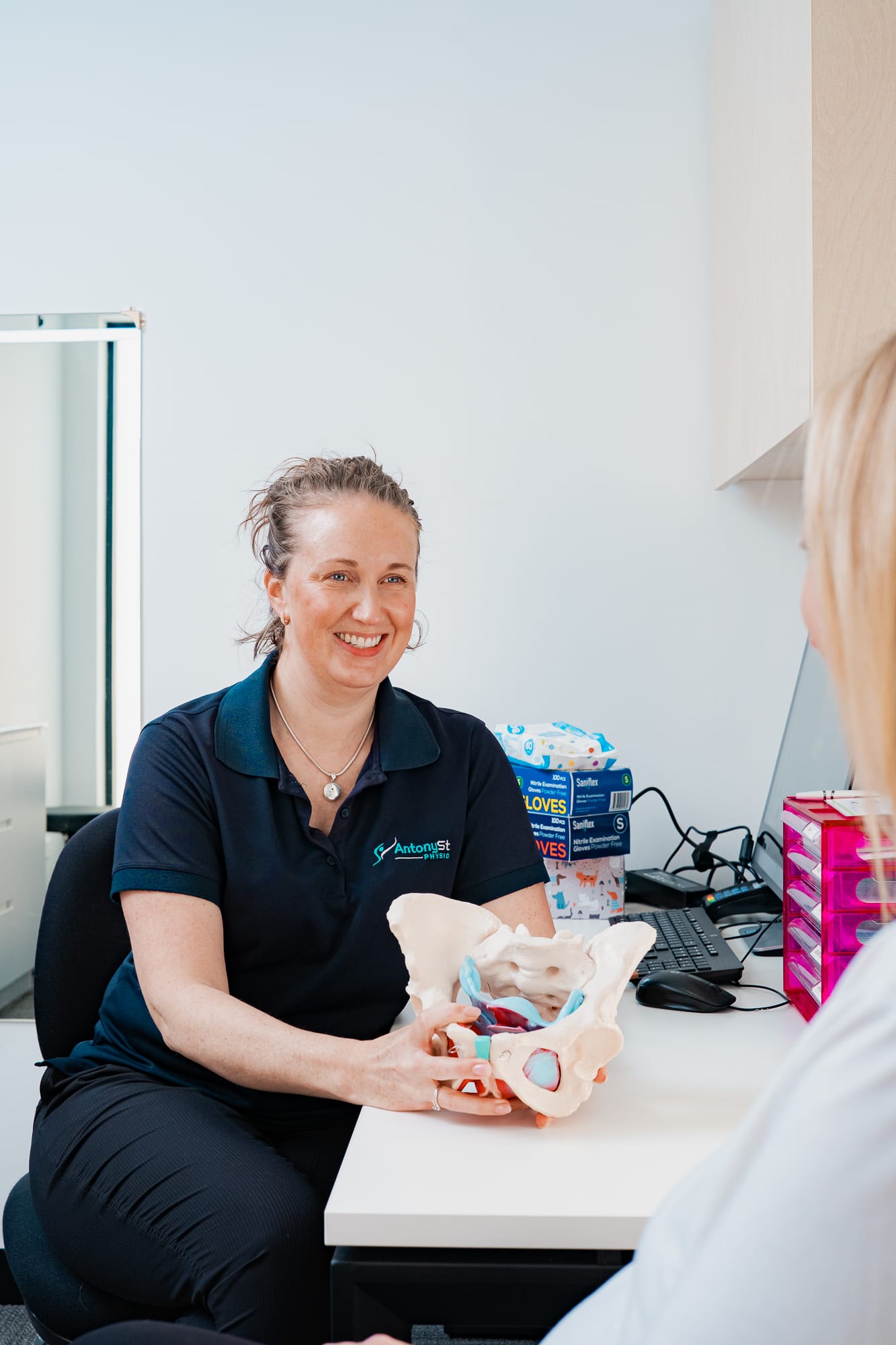
Assessment is detailed. We go through your history and look at all aspects of your pelvic health, like bladder and bowel function. Then we look at your lower back and pelvic posture before looking at your pelvic floor in more detail. This can involve internal assessment if indicated. We also use real-time ultrasound to scan your bladder and pelvic floor to look at things like bladder positioning and emptying ability.
Training to be a pelvic health physio involves completing your undergraduate degree in all areas of physiotherapy, followed by a postgraduate degree in continence and pelvic health. So you’re in expert hands.
How Treatment Works
Treatment is tailored individually but always includes education around what’s going on and why it might be happening. Exercises are also prescribed depending on the diagnosis, and we spend more time teaching patients how to relax than we do strengthening.
We often have to work closely with your referring doctor to ensure your hormones are adequately treated, and work with naturopaths to help with elements of gut health and general wellbeing.
Every treatment plan is collaborative and personalised—designed to fit your life, not disrupt it.
What Recovery Looks Like for Most Women
Progress varies in terms of time, and it’s dependent on the individual as well as the condition. Some aspects, like postnatal rehabilitation, are fairly standard as they’re healing-dependent and your body requires time to go through that process. Some pain conditions that may have been persistent for many years can take equally as long to recover from. However, there are cases of sexual dysfunction that rectify in a matter of weeks.
Every case is different, but you can expect to be given a timeline with suggestions of how often to come for treatment. This can vary from weekly to monthly, and some patients may only need to be seen a few times a year.
Progress is very achievable and small wins along the way can make a real difference.
When to Seek Help
If your symptoms are starting to change your quality of life or are stopping you from doing things that you enjoy, then it’s time to get some help. Even better if you can prevent these problems from occurring by seeing your women’s health physio after major life events, like having a baby.
It’s never too late to seek support, but early intervention can make life so much easier.
Book a Pelvic Floor Physio Appointment in Perth
If something here sounds familiar, you’re not alone and you don’t need to manage it on your own. As a trained women’s health physiotherapist, I’m here to help you feel comfortable, supported and confident.
Book online or call to find availability.